
How to Write Goat Grazing Into a Municipal RFP or HOA Bid
Municipal buyers and HOA boards often don't know how to scope a grazing bid so it gets fair, comparable quotes. Here's what to put in the RFP.
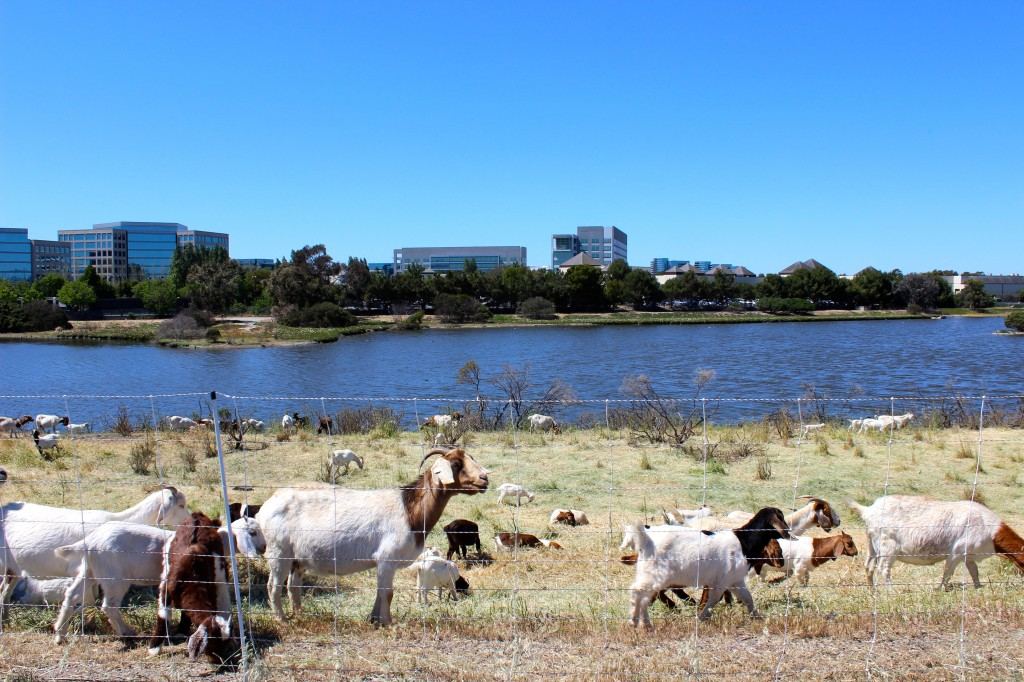
Municipal procurement staff and HOA boards often want to put targeted grazing out to bid, but haven't scoped a grazing RFP before — and a vague specification makes it hard to get comparable quotes, or any credible bids at all. Here's what actually belongs in the request.
Describe the parcel the way a grazing operator needs it described
Total acreage matters less on its own than vegetation type and density — a bid line that just says "50 acres of vegetation management" invites wildly different quotes than one that specifies "50 acres, mixed grassland with dense blackberry and invasive shrub encroachment along the creek corridor." Include terrain notes (slopes, water crossings, rock outcrops), access points for trailers and fencing crews, and any sensitive areas — habitat, protected species, structures, or public-access zones — that need to be routed around.
Specify the outcome, not just the method
An RFP that asks for "vegetation reduced to X inches or less across the treated acreage by [date]" gives bidders a clear target and gives evaluators an objective way to compare proposals, rather than comparing herd sizes or price per acre in the abstract. If the goal is fire-fuel reduction, reference the specific defensible-space or fuel-load standard you're working toward; if it's habitat or invasive-species control, specify the target species.
Ask for the operational details that separate real bids from guesses
A credible large-scale grazing bid should include proposed herd size and how it was calculated from your acreage and vegetation description, the rotation/paddock plan and estimated timeline, fencing approach (temporary electric netting is standard), on-site crew and herd health/predator management plans, water source and hydration plan for the herd, and insurance and liability coverage. A bid that skips these and just quotes a flat number per acre is worth a follow-up question before it's compared to others.
Build in a site visit before bids are due
Because herd size and cost depend heavily on vegetation density and terrain that photos alone can undersell or overstate, a mandatory or optional pre-bid site walk produces much more comparable quotes than a paper-only RFP — and it filters out bidders who aren't actually equipped for the acreage involved.
For HOA boards specifically
Boards evaluating a grazing bid alongside quotes from landscaping crews or herbicide applicators should ask each bidder to address the same property description and outcome — otherwise you're not comparing like-for-like proposals. It's also worth asking directly about herd size and minimum acreage; an operator whose herd is sized for residential lots may not be equipped for a large common-area parcel, and vice versa.
Evaluating the bids that come back
Beyond price, weigh whether the proposed herd size and timeline are actually consistent with your acreage and vegetation density (a bid that's dramatically cheaper because it proposes a much smaller herd may simply take far longer, or not finish before your deadline), whether the operator carries adequate insurance and has handled a project of comparable scale, and what documentation they'll provide for your records or reporting requirements.
Ready to clear your property naturally?
Talk to a real person about your property and get a free estimate over the phone — we serve properties across California and generally require about a 10-acre minimum per project.
Call 1-858-751-GOATGet a Free Estimate