
Multi-Year Grazing Contracts: How Ranches and Land Managers Plan Beyond One Season
One grazing pass knocks vegetation down. A standing annual contract is what actually keeps it down — here's how large landowners structure recurring grazing programs.
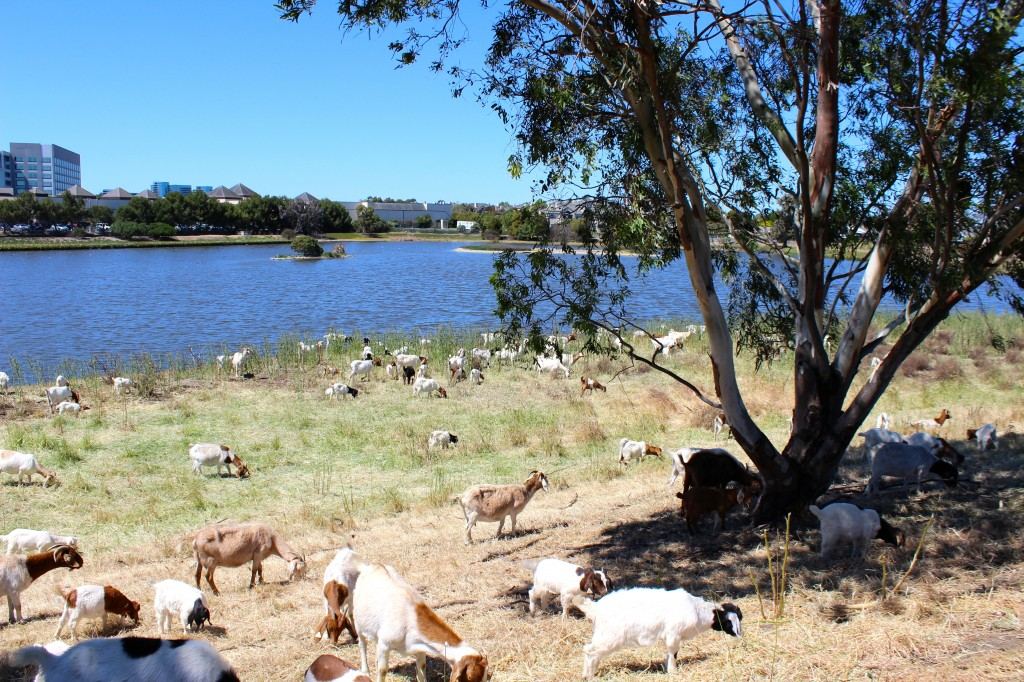
Brush and invasive species don't stay cleared. Root systems survive a grazing pass, and on large acreage a single project — even a thorough one across 100 or 500 acres — is a reset, not a permanent fix. Most of the ranches, land trusts, and large landowners we work with eventually move from booking one-off projects to a standing annual or multi-year grazing contract. Here's how those are usually structured.
Why a single project isn't the end state
The first project on a heavily overgrown property is almost always the biggest — clearing years of accumulated brush across the full acreage. Every project after that is smaller, because the herd is now managing regrowth instead of clearing an established backlog. Landowners who treat the first project as a one-time fix are often surprised a year or two later when brush density has crept most of the way back; landowners on a recurring contract rarely see that, because the herd never lets regrowth fully re-establish.
What a typical multi-year structure looks like
Year one usually treats the full acreage at whatever herd size the initial density requires. Subsequent years typically need a smaller herd or a shorter rotation on the same acreage, since the vegetation the herd is managing is regrowth rather than an established backlog. Contracts are commonly structured around one grazing pass per year, timed to the property's specific goals — ahead of fire season for wildfire-prone parcels, post-harvest for working ranchland, or whatever window fits the land's use.
Coordinating with existing ranch operations
For working ranches, a grazing contract is scheduled around the ranch's own cattle or sheep rotations rather than competing with them — reclaiming brush-encroached rangeland is often the explicit goal, since brush encroachment is what reduces usable grazing land for a ranch's own livestock over time. Getting that scheduling right is a big part of what a multi-year relationship gets you that a one-off booking doesn't: we already know the property, its access points, its seasonal patterns, and its problem areas.
What land trusts and public land managers typically need
Conservation and public land contracts often carry documentation requirements — treated acreage, before/after assessment, timeline compliance tied to habitat or seasonal wildlife considerations. A multi-year contract lets that documentation build year over year rather than starting from scratch on every booking, which matters for land managers reporting to a board, an agency, or a grant program.
Is a multi-year contract worth it over separate one-off jobs?
For a property with an ongoing vegetation or fire-fuel management need, yes — mainly because it keeps herd size and cost from creeping back up to first-project levels every time regrowth is allowed to fully re-establish between bookings. It also means less re-scoping: an established site relationship means less time re-assessing terrain, access, and vegetation from scratch on every visit.
Ready to clear your property naturally?
Talk to a real person about your property and get a free estimate over the phone — we serve properties across California and generally require about a 10-acre minimum per project.
Call 1-858-751-GOATGet a Free Estimate