
Scotch Broom and Goats: Cutting, Grazing and the 30-Year Seed Bank
Broom is easy to eat and hard to finish. Goats help most as follow-up after cutting, and only if the grazing continues until the seeds run out.
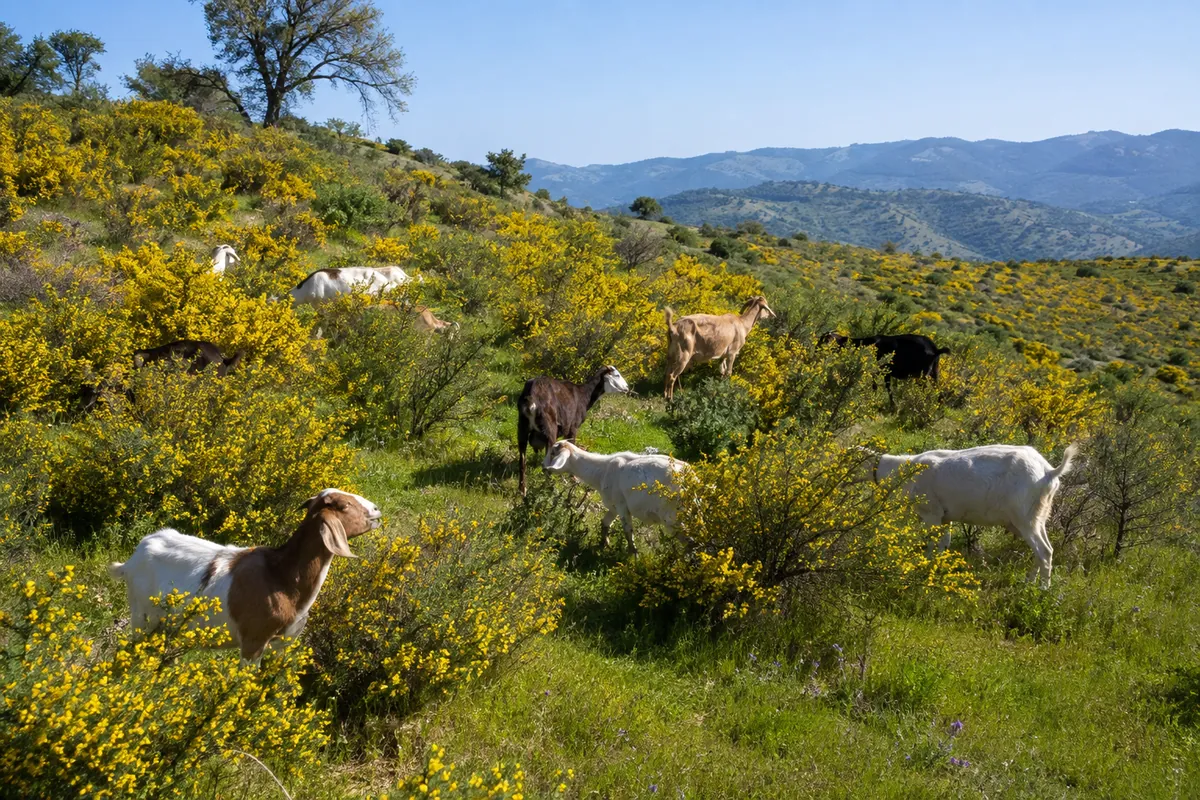
Scotch broom is a pretty yellow shrub that has taken over hillsides, roadsides and forest edges. The seeds have a hard coat, and some sources say they can stay alive in the soil for up to thirty years. That is the real problem. You can remove every plant on a property and still have broom coming up a decade later.
What goats do with it
Most livestock avoid broom. The foliage can be mildly toxic and it is unpalatable to many animals. Goats are the exception. They will browse it, and a field trial in Australia found that both goats and sheep removed stems and flowering points within reach, preventing seed production on the parts they ate.
The same research found limits. Goats had a strong effect where broom density was low, and little impact where broom covered about ten percent of the ground. And around eight percent of seeds remained viable after passing through the animals, so grazing can also move seed around.
What extension sources recommend
- Pull small young plants by hand. This is the usual advice for small infestations.
- Cut mature plants, ideally before seeds form, then use goats on the resprouts. Confined goats are described as useful for controlling resprouts after a cut or burn.
- Keep going. One Washington State University sheet says grazing must continue until the seed bank is eliminated, because suppressed plants return quickly once livestock leave.
- Do not expect grazing alone to do it. A University of California-derived weed report says grazing alone is not an effective option, though it helps with follow-up.
A realistic plan for a broom stand
- Cut or mow the big stems where you can reach them.
- Graze the resprouts and seedlings in the first spring and summer.
- Repeat each year, and keep an eye on the area for several years.
- Plan for seedlings. Hand-pull them when they are small.
Where we stand
Broom is a good example of a plant where we would be doing you a disservice to promise a single-visit fix. Goats are a useful part of a multi-year plan, not a replacement for it. If a quote promises to eliminate broom in one pass, ask how they plan to deal with the seed bank. See the seed bank problem.
Sources
Ready to talk about your property?
Talk to a real person about your property and get a free estimate over the phone — we serve properties across California and generally require about a 10-acre minimum per project.
Call 1-858-751-GOATRequest a Free Estimate