After a Wet Winter: Why Rain Creates Fire Fuel, and What to Do in Spring
Rain is good news until June. A wet winter grows the grass that burns fastest. How to think about spring, and when the clock runs out.
California gets most of its rain in winter and almost none in summer. That has a consequence people tend to forget when it is raining. Every inch of rain feeds growth that will turn brown and dry out by June. A wet winter does not make a safer summer. It makes more fuel.
Why grass matters so much
Grass is what fire professionals call a fine fuel. It is thin, it dries quickly and it ignites easily. A grass fire can move fast, and the flames from burning grass can reach shrubs, fences and houses. It is not the biggest fire in terms of heat, but it is often the one that starts the bigger ones.
In a dry year, grass is sparse. After a wet winter, it is thick and tall, and it often grows where nothing grew the year before: on bare slopes, in vacant lots, along fences and in neglected corners.
The rule most people have to follow
University of California extension guidance says that before fire season each year, grass and weeds near buildings should be mowed to about three to four inches, for at least thirty feet around structures. Some fire codes set a specific maximum of four inches. Local agencies set the dates and the standards, so check yours. One city's fire department, for example, requires grass cut to four inches or less by May 1. Others set dates later in the season.
What to do in spring
- Walk the property in March or April, when the grass is green and still growing. If it is already knee-high, you have a big job coming.
- Book early. Grazing companies fill up in spring and early summer. See when to book goat grazing.
- Handle the area around buildings yourself or with a mower. Goats are best on the bigger acreage further out.
- Graze before the weeds set seed. The timing keeps the weeds from replacing themselves next year.
What goats can and cannot do about grass
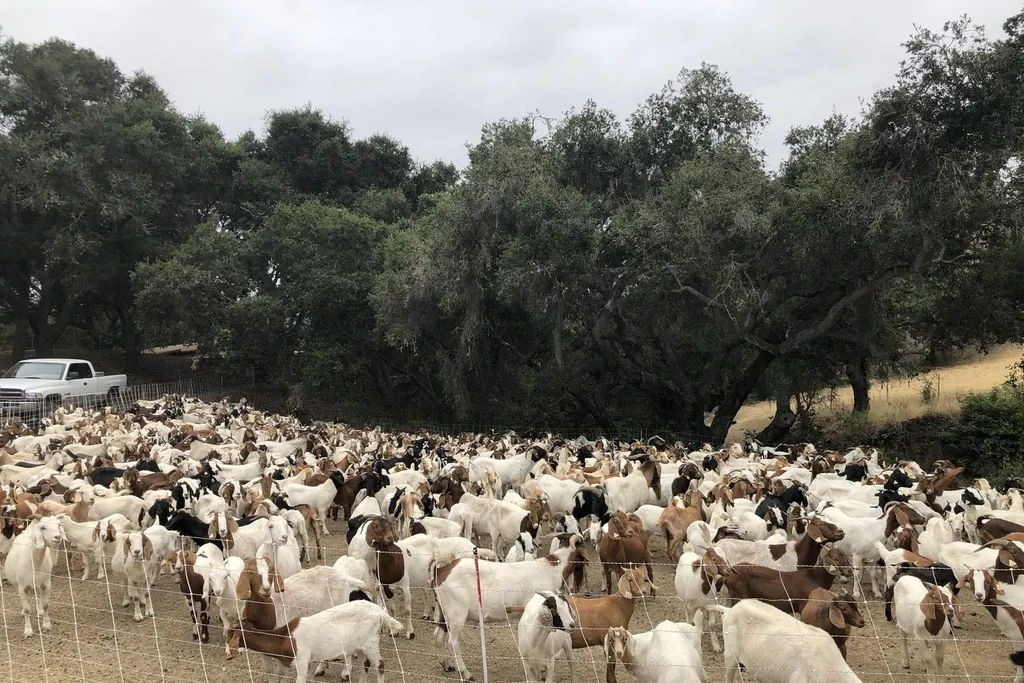
Goats are browsers and prefer brush and broadleaf weeds, but they will eat grass, and a herd can graze down a field of tall annual grass quickly. For large properties with grass, brush and weeds mixed, a herd can do the job on difficult ground. For a flat open field of pure grass, a tractor with a mower is often cheaper.
No type of vegetation management makes a property fireproof. What grazing does is reduce the amount of fuel and break up its continuity. See do goats prevent wildfires? for what the research says.
Sources
Ready to talk about your property?
Talk to a real person about your property and get a free estimate over the phone — we serve properties across California and generally require about a 10-acre minimum per project.
Call 1-858-751-GOATRequest a Free Estimate