Himalayan Blackberry and Goats: A Years-Long Fight That Goats Can Help Win
Goats love blackberry, and blackberry always comes back. What the research says about how many seasons it takes and why stopping early wastes the work.
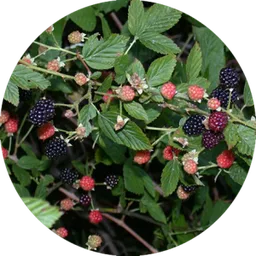
Himalayan blackberry is the plant most people picture when they say "bramble." Thick canes, hooked thorns, and a root system that sends up new shoots after you hack the top off. It spreads along creeks, roadsides and abandoned lots. It is also a favorite food of goats.
What goats do to it
Goats strip the leaves and soft growth, and they chew green canes. A herd can remove most of the top growth in a single season. That is useful on its own, because it opens the thicket so that people can see what is underneath and get equipment in.
But the plant does not die from losing its leaves. It draws on stored energy in its roots and sends up new canes. Researchers working on Himalayan blackberry and goat browsing have described exactly that pattern: top growth gone in a season, regrowth when the animals leave.
Why repeat grazing is the point
Extension guidance for blackberry says the same thing from several directions:
- If grazing continues over multiple seasons, root reserves are drawn down and plants can be killed. If it stops early, they regrow.
- Goats are most effective on young, regrowing stands. On large mature canes they tend to strip leaves but not much else.
- Grazing has to be sustained and timed. A single visit followed by years of nothing lets the thicket recover.
- Follow-up is needed for several years afterward, because seedlings keep appearing.
One Oregon source said it plainly: any control strategy can be short-lived unless the project is planned and funded for the long term. That is true of grazing too.
A sensible plan
- Start by cutting or mowing mature canes where machines can reach, so the herd can get to fresh growth. This is common practice for old stands.
- Graze when the plant is leafing out and growing, typically spring into summer.
- Return for a second and third pass. Regrowth is what you are feeding on. Each pass makes the plant spend reserves.
- Pull or spot-treat the stragglers after the herd leaves.
What we tell people
A blackberry thicket on a creek bank is a good project for goats, provided you plan for more than one year. A single grazing is a good start but not a cure. If someone tells you one visit will end blackberry for good, they are overselling. For a sense of what repeated visits cost over time, see the true cost of traditional land clearing.
If a creek or stream runs through the property, there are extra rules about where animals can go. Tell us about it up front.
Sources
Ready to talk about your property?
Talk to a real person about your property and get a free estimate over the phone — we serve properties across California and generally require about a 10-acre minimum per project.
Call 1-858-751-GOATRequest a Free Estimate